


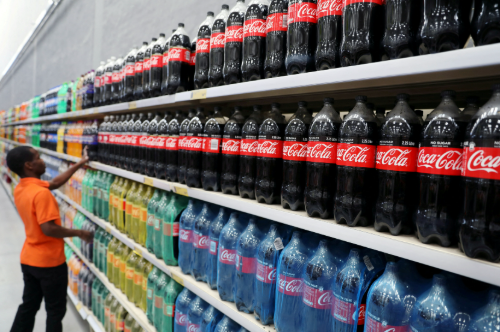
Coca-Cola Plans to Invest $1B in South Africa Expansion Through 2030
TLDR
- Coca-Cola Co. commits 17.6 billion rand by 2030 to expand production and distribution in South Africa, supporting capacity growth and local bottling partners.
- The investment reinforces South Africa as a strategic hub for Coca-Cola's regional growth, leveraging the country's scale, infrastructure, and access to Southern African markets.
- Restructuring efforts, including the formation of Coca-Cola Beverages Africa, signify a shift towards fewer, larger bottling partners with stronger balance sheets, enabling enhanced capital investment in infrastructure and distribution networks.
Coca-Cola Co. will invest 17.6 billion rand in South Africa through 2030 to expand production and distribution. The company said the funding will support capacity growth and product development with local bottling partners.
The investment will be deployed with Coca-Cola Beverages South Africa and Coca-Cola Peninsula Beverages. The group said the plan aims to strengthen operations in one of its largest markets on the continent.
Coca-Cola has operated in South Africa since 1928. It built its presence through a franchise model and maintained local bottling during periods of political and economic pressure. After 1994, the company restructured its operations and positioned the country as a base for African growth.
The move follows changes in Coca-Cola’s African bottling system, including the formation of Coca-Cola Beverages Africa in 2016. In a separate deal, Coca-Cola HBC AG agreed to acquire a 75% stake in that business in a transaction valued at about 2.6 billion dollars.
The announcement came at an investment conference led by Cyril Ramaphosa, who is seeking to attract 3 trillion rand in investment over 5 years. Coca-Cola’s system in South Africa employs about 7,800 people and supports more than 79,000 jobs across its supply chain.
Key Takeaways
Coca-Cola’s latest investment signals a long-term bet on South Africa as a base for regional expansion. The country offers scale, infrastructure, and access to Southern African markets. The bottling system model allows Coca-Cola to limit direct capital exposure while maintaining control over branding and distribution standards. The restructuring of Coca-Cola Beverages Africa and the entry of Coca-Cola HBC AG show a shift toward fewer, larger bottling partners with stronger balance sheets. This structure supports capital investment in plants, logistics, and cold chain networks. South Africa remains one of the largest consumer markets in Africa, with established retail channels and higher per capita consumption compared with many neighboring countries. For investors, the announcement aligns with a broader trend of multinationals maintaining exposure to core African markets despite currency volatility and policy risk. It also reflects how global consumer companies use local partnerships to scale operations while adapting to regional demand patterns.
Think someone else should see this?









To invest in this opportunity and other opportunities across Africa
Download the daba finance app on your mobile through

Take action.

Download app
Start investing in Africa’s best opportunities, including stocks, bonds, startups, venture funds, and more.
Partner with us
Unlock exciting business opportunities and growth potential.
Join Daba
Become a part of our vibrant community and enjoy exclusive benefits.
Contact us
Reach out to us for inquiries, support, or collaboration.